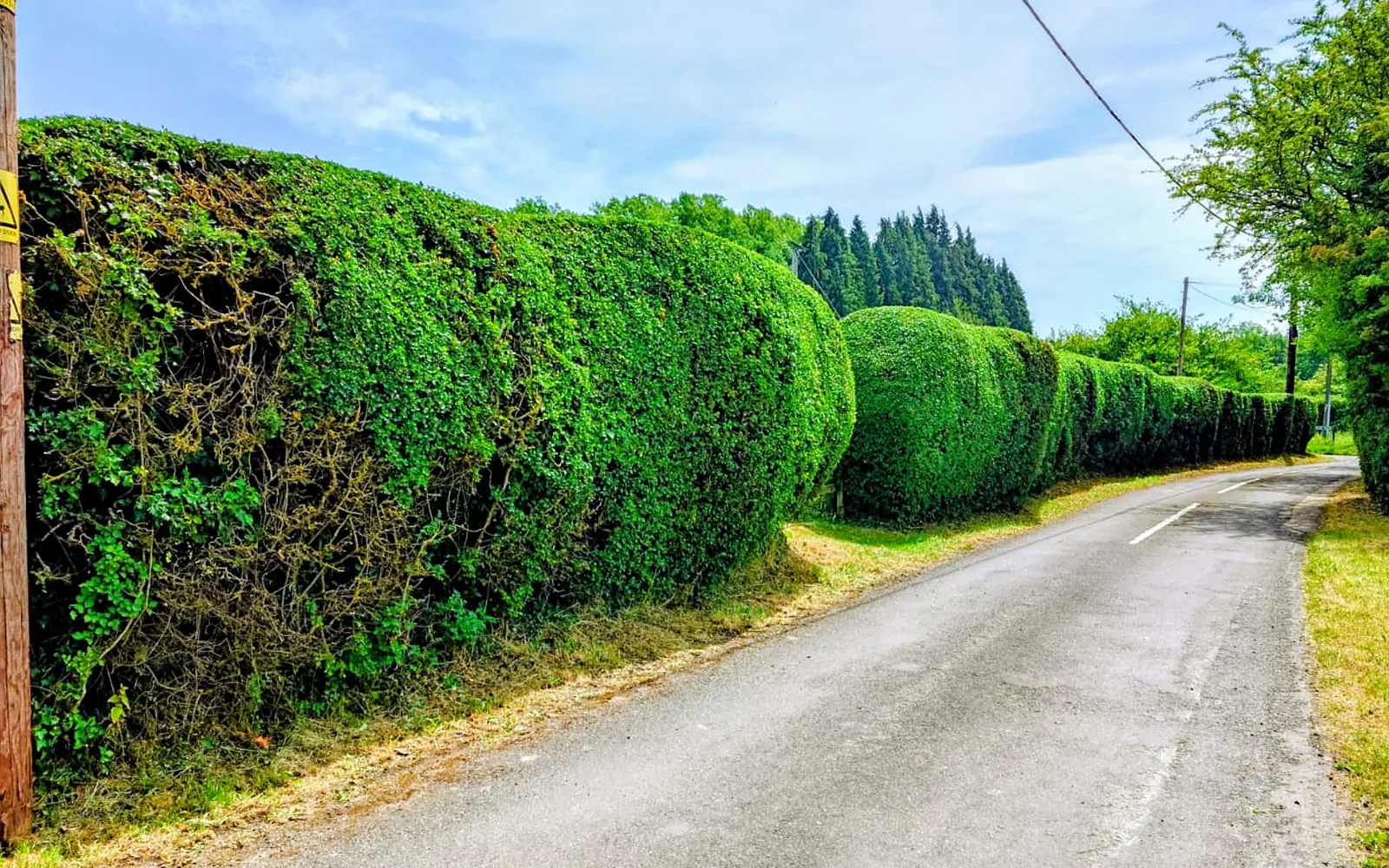
All hedge types, kept neat, healthy and the right shape
Hedges give a garden its shape, and a well-kept one lifts the whole place. We cut everything from a low box edging to a towering leylandii boundary that's blocking the light. Whatever you've got, we'll trim it, shape it, or bring it back under control, and take every bit of the cuttings away.
This catches a lot of people out, so it's worth being clear. Birds nest in hedges, and under the Wildlife and Countryside Act 1981 it's an offence to damage or destroy an active nest. The main nesting season runs roughly March to August, though it can start earlier and run later.
What that means in practice: we check a hedge for active nests before we put a trimmer anywhere near it, and we schedule the big cuts and reductions for autumn and winter when the birds have finished. A light trim in season is usually fine once we've checked, but we won't cut a hedge with a nest in it. That's not us being awkward, it's the law, and it's the right thing to do.
A hedge isn't just a hedge. Privet's vigorous and takes two or three cuts a season. Beech gets one cut in August, which is what lets it hold those coppery dead leaves right through winter for year-round screening. Box wants a couple of trims but has its own troubles these days (more on that below).
The one that really matters is laurel. Those big glossy leaves should be cut with secateurs, not run through a hedge trimmer. Shear straight through them and you're left with sliced leaf-halves that brown off at the edges and look tatty for weeks. It takes longer to do it properly, but it's the difference between a laurel hedge that looks sharp and one that looks chewed.
We bring overgrown hedges back down all the time. With most species, if it's a big reduction, we'll do it over a couple of stages so we don't shock the plant or leave it looking butchered.
Leylandii and most conifers come with a warning, though, and it's an important one. They won't reshoot from old brown wood. Cut a leylandii back past the green into the bare wood and that face stays dead, permanently. So we only ever trim conifers within the green growth. If a leylandii's outgrown its space so badly that there's no green left to cut back to, honestly the better answer is often to take it out and start again, and we'll tell you that rather than leave you with a brown wall. Yew's the one exception, the only common conifer that will green back up from old wood.
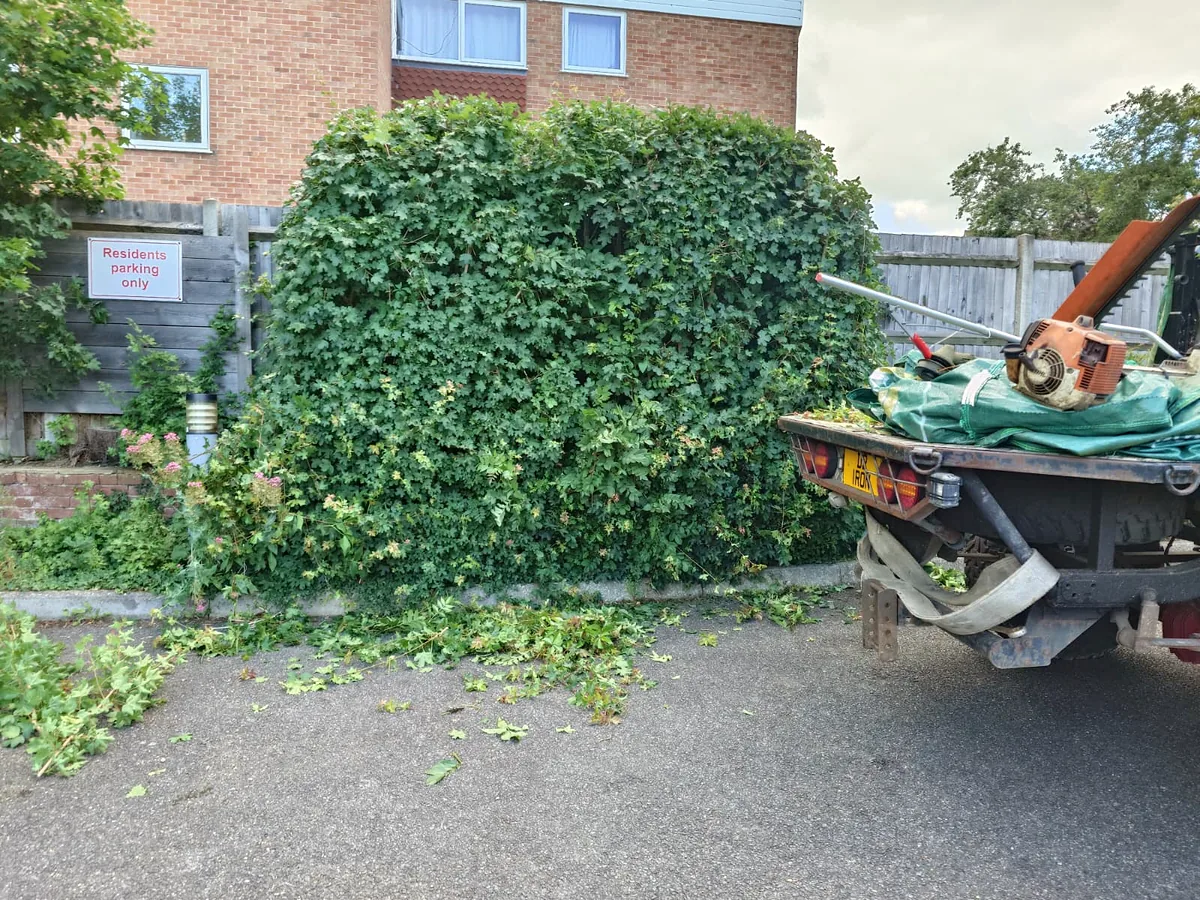
The bird nesting season runs roughly March to August, and it's an offence under the Wildlife and Countryside Act 1981 to damage an active nest. We check every hedge for nests before we cut, and we schedule major cuts and reductions for autumn and winter to be safe. A light in-season trim is usually fine once we've checked there's nothing nesting.
Not in itself, but it's an offence to damage an active bird's nest, and summer is peak nesting season. So the law effectively means you have to check first, and avoid cutting any hedge with a nest in it. We always check, and we'd rather move a big cut to autumn than risk it.
It depends on the hedge. Most formal hedges like privet need two or three cuts through the growing season to stay crisp. Beech and hornbeam need just one, in August. Slower or informal hedges might only need a once-a-year tidy. We'll recommend the right rhythm for what you've got.
We can bring the height and width down, but only within the green growth. Conifers like leylandii won't regrow from bare brown wood, so we can't cut back into it and expect it to green up. If it's so overgrown there's no green left to work with, we'll give you an honest view on whether it's worth reducing or better replaced.
Not at all. We can trim your side of a shared hedge with no bother. You're entitled to cut overhanging growth back to the boundary line, and we work tidily around it. Strictly speaking the trimmings belong to the hedge's owner, so if it's not yours we'll have a quick word about what to do with the cuttings.
Yes, all of it. We bag and remove every bit of the trimmings and leave the area swept and tidy. You won't be left with a pile of hedge to deal with.
It comes down to the size and type of hedge, how overgrown it is, and whether it needs access equipment. Conifer reductions take longer than a quick privet trim, for instance. Give us a ring and we'll come and look, then give you a clear price with the waste removal included.
We provide hedge trimming services across a 15-mile radius from our base in Horley.