Bring a tired, mossy or patchy lawn back to life
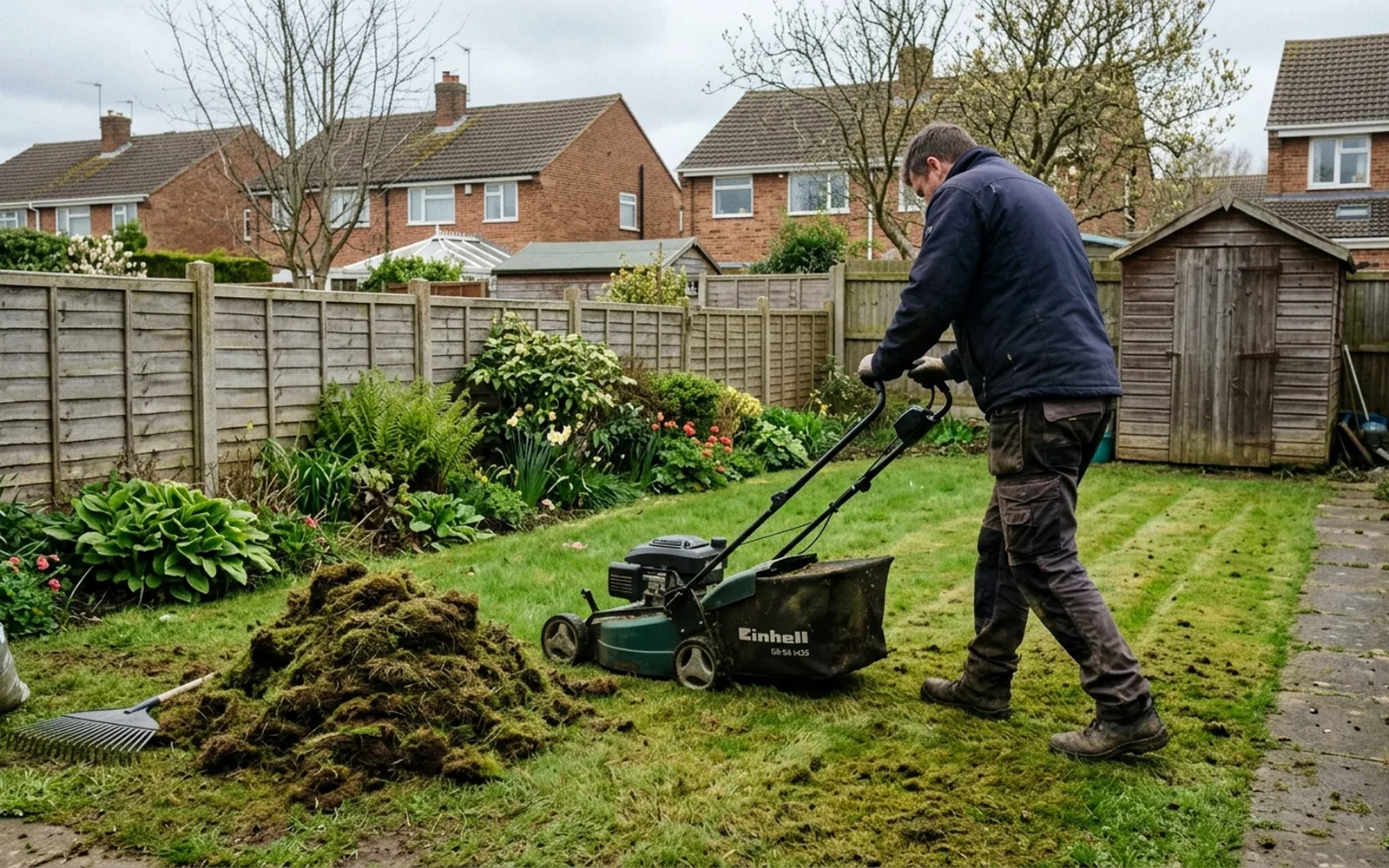
Mowing keeps a lawn tidy. It's the scarifying, aerating and feeding that keep it healthy. If your lawn's gone spongy with moss, thin and patchy, or it sits wet for days after rain, a regular cut alone won't fix it. This is the work that sorts out what's going on underneath.
If your lawn's full of moss, killing the moss won't fix it. Moss moves in where grass is already struggling, and that's almost always down to one of a few things: shade, compacted soil, poor drainage, acidic ground, or mowing too short. Treat the moss without dealing with the cause and it's back within the year. We'd rather tell you that up front than sell you a treatment that doesn't last.
So the first job is usually working out why the grass is weak in that spot, then fixing it. Sometimes that's letting more light in or raising the cutting height. Often it's scarifying and aerating to deal with thatch and compaction.
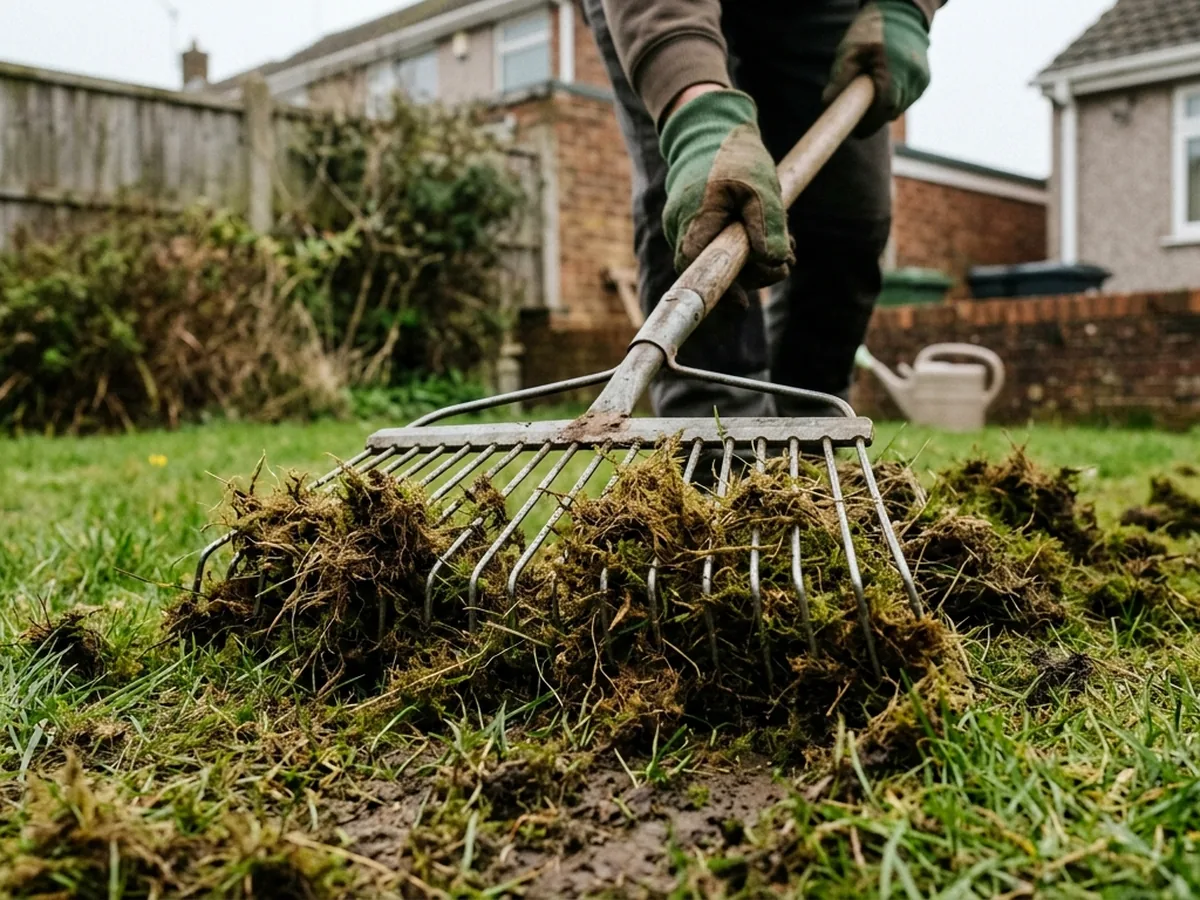
Scarifying drags out the dead thatch and moss that builds up at the base of the grass and stops water and air getting to the roots. If your lawn feels soft and springy underfoot, that's the thatch. It's best done in spring or early autumn, once a year for most lawns.
Aerating relieves compaction, the squashing of the soil from feet, kids and mowers that stops it draining. On the heavy clay you get a lot of round here, hollow-tine aerating (which pulls out little plugs of soil) makes a real difference to a lawn that waterlogs every winter. Autumn's the time for it. Chalk and greensand lawns up towards the Downs have the opposite problem, draining so fast they burn off in summer, so there the focus is holding moisture in, not getting it out.
A spring feed high in nitrogen gives the lawn a strong green flush for the season. An autumn feed, lower in nitrogen and higher in potassium, toughens the roots up for winter rather than pushing soft growth. One hard rule we stick to: no nitrogen feed after August, because the soft growth it pushes just gets battered by the first cold snap.
That said, plenty of lawns grow perfectly well with no feed at all. We won't talk you into a treatment programme you don't need. If the lawn's healthy, we'll say so.
Moss takes hold where the grass is weak, and that's usually shade, compacted soil, poor drainage, acidic ground, or mowing too short. The moss is the symptom. We'll find the cause and deal with that, otherwise it just comes straight back.
Spring or early autumn, before the frosts, once a year for most lawns. That's when the grass can recover quickly from being raked out. We wouldn't scarify in the heat of summer or the depths of winter.
Scarifying pulls out the dead thatch and moss sitting on the surface. Aerating punches holes down into the soil to relieve compaction and improve drainage. A spongy lawn usually needs scarifying. One that waterlogs needs aerating. Plenty of lawns benefit from both.
Usually, yes. Scarifying, aerating and overseeding the thin areas will thicken most lawns up over a season. If patches are bare we'll overseed them in early autumn or spring when seed takes best. Some very worn lawns are quicker to patch-turf, and we'll tell you if that's the case.
Often not. Most lawns grow fine unfed. Feeding helps when the colour and growth are genuinely poor, and the timing matters. We won't push a feeding programme on a lawn that's doing well.
That's usually compaction and heavy clay soil, which we see a lot of around Horley and Surrey generally. Hollow-tine aeration, sometimes with a sandy top dressing brushed in, gets water moving through the soil again. It's not an overnight fix but it makes a real difference over a season or two.
We provide lawn treatment services across a 15-mile radius from our base in Horley.