

Topiary in Lingfield
Box balls, yew shapes and crisp formal edging for Lingfield’s cottages and village houses.
A clipped pair of box balls by a front door suits Lingfield’s older streets. Around Old Town and Plaistow Street, where the conservation area holds 25 listed buildings, a little formal topiary sits well against timber framing and old brick. Topiary in Lingfield, as anywhere, only stays crisp with regular, careful trimming.
We shape and maintain balls, cones, spirals and formal hedging by hand, so the lines stay sharp. If your box is struggling, we’ll tell you why and what we’d do. Clippings are gathered up and taken away, so they don’t sit in the bed below and spread disease.
What we do
- Box ball, cone and pyramid shaping and upkeep
- Spiral, pyramid and custom topiary shapes
- Formal hedging with crisp tops and clean edges
- Yew, box, privet and laurel ornamental work
- Regular trims to keep shapes defined
- Honest advice on box blight, box moth and alternatives
Topiary in Lingfield through the year
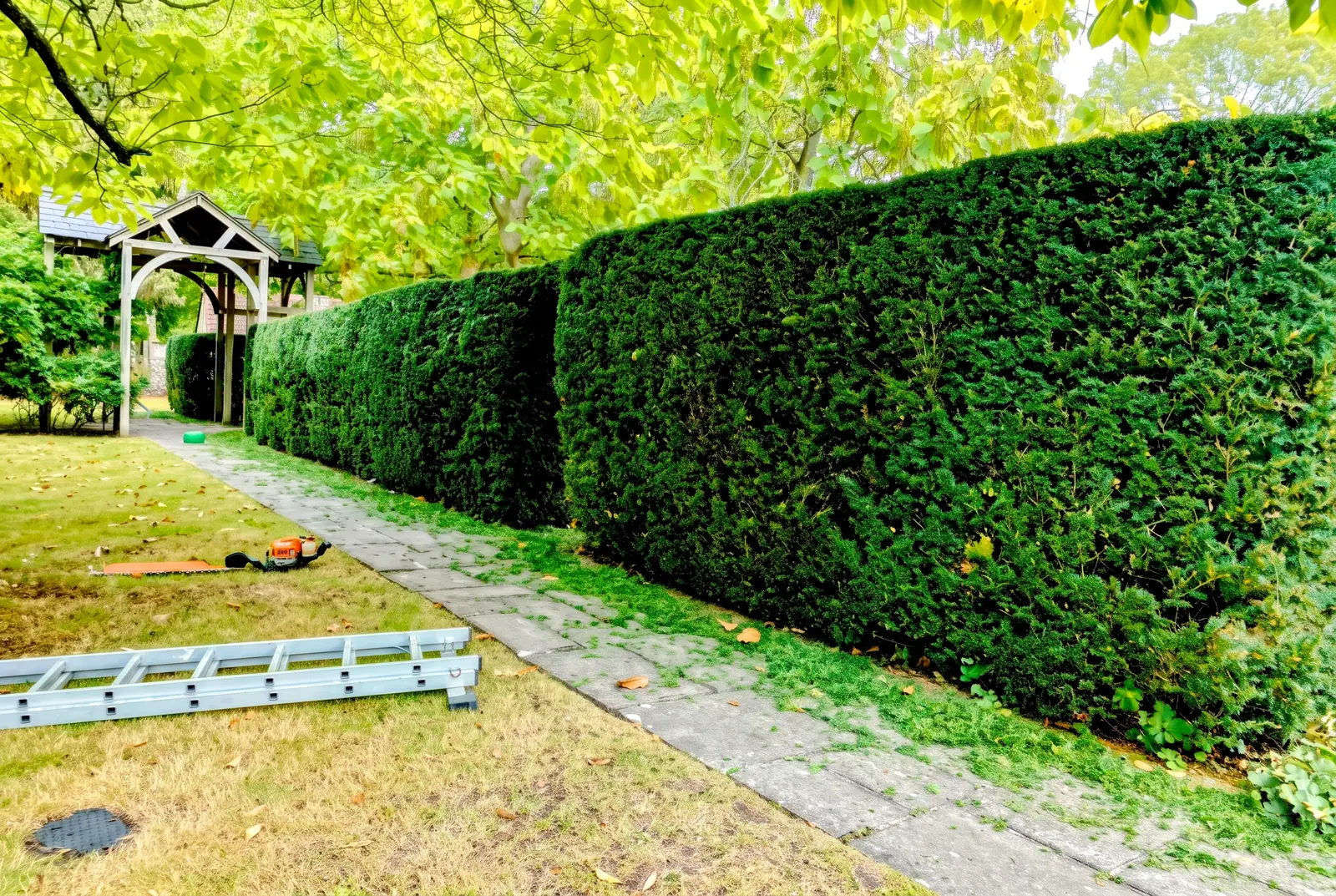
For most box and privet shapes, topiary pruning means two trims a year, one in early summer and one in late summer. Yew is slower and usually gets a single cut late in summer. On moisture-holding silty clay, growth can be soft and quick in a wet year, so shapes lose their edge sooner than you’d expect. Yew is the forgiving one. It’s the only common conifer that greens back up from old wood, so a neglected yew shape can usually be rescued with patience.
Box blight, box moth and what to plant instead
Box blight loves still, damp air, and a sheltered garden on heavy ground gives it plenty. Box tree caterpillar has spread across the south east too, leaving webbing and bleached, chewed leaves deep inside the plant. We’ll check your plants and give you a straight view on whether they’re worth saving. If not, yew or Ilex crenata make good replacements for topiary balls and low edging, and they’re far less trouble to keep.
Topiary in Lingfield: your questions
Anything else, just ring. You’ll speak to the people who do the work.
How often does topiary need trimming?
Twice a year for most box and privet, in early and late summer. Yew usually manages with one cut in late summer.
Can you create a topiary garden from shrubs I already have?
Often, if they’re yew, box, privet or something similar. It takes a few seasons of steady trimming to build a clean shape, so it’s a patient job.
Is box with blight worth saving?
Sometimes. Thinning for airflow and clearing fallen leaves helps mild cases. Plants that have gone badly bare are usually better replaced, and we’ll be honest about which yours are.
Do topiary balls suit an old cottage frontage?
Very well, as long as they’re in proportion to the door and windows. Clipped shapes in pots or beds don’t need any permission. If you’d rather avoid box, we’d suggest yew or Ilex crenata.
How much does topiary cost to keep up?
It depends on how many pieces you have, their size and how often they’re cut. Most people fold topiary into a regular visit. We’ll give you a fixed price after a look.
More garden help in Lingfield.
-
 Lawn Mowing
Regular or one-off grass cutting across Surrey and Sussex
-
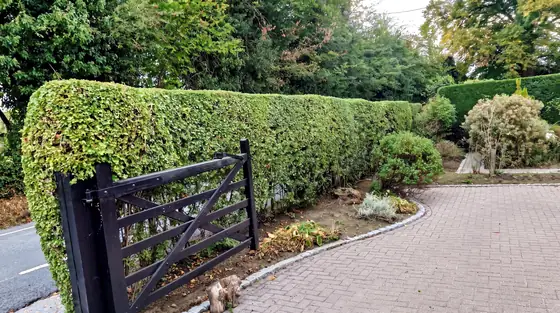 Hedge Trimming
All hedge types, kept neat, healthy and the right shape
-
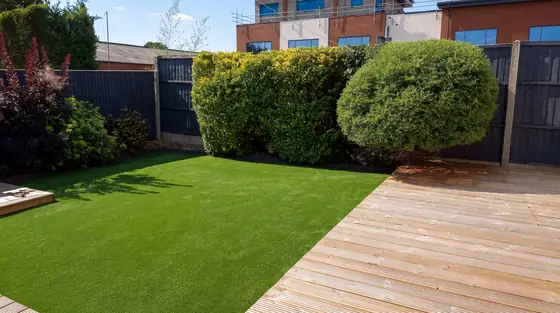 Pruning
Shrubs and roses pruned at the right time, the right way
-
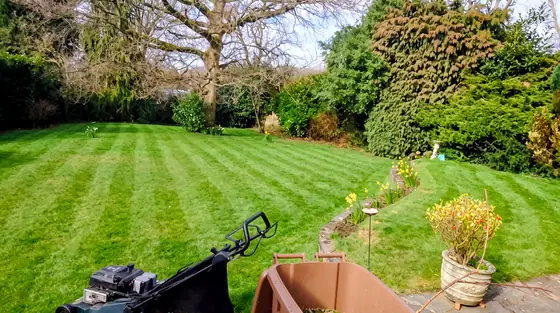 Garden Maintenance
One regular visit that keeps the whole garden looking after itself
Topiary nearby
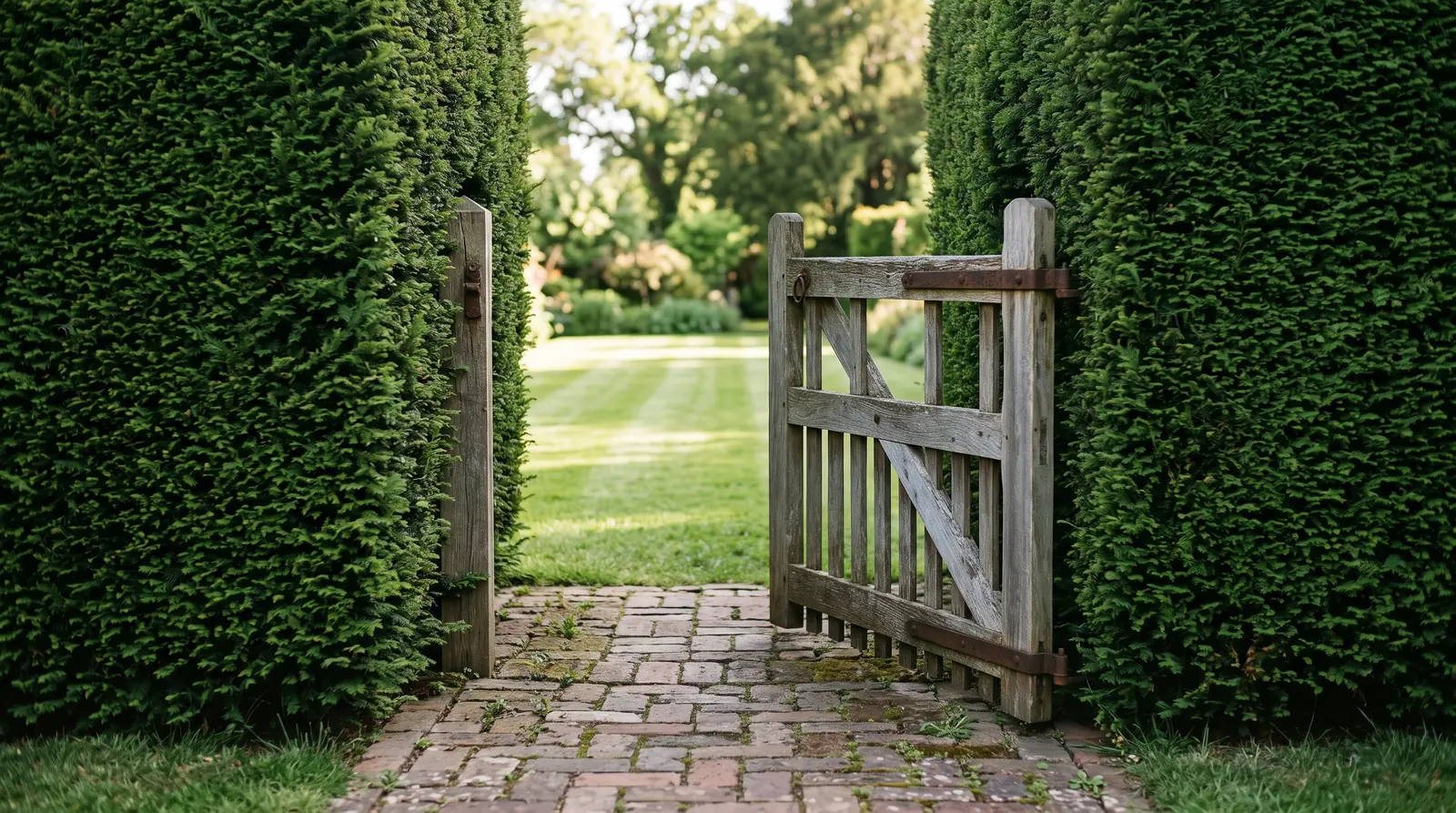
Topiary in Lingfield? Let’s talk.
Tell us what you need and roughly where. We’ll come and look, and give you a straight price.