

Topiary gives a garden structure and a bit of character, whether it’s a pair of box balls either side of a door or formal shapes set into a border. It needs a patient eye and a regular hand to stay crisp, and that’s exactly the sort of careful work we enjoy.
What we do
- Box ball, cone and pyramid shaping and upkeep
- Spiral, pyramid and custom topiary shapes
- Formal hedging with crisp tops and clean edges
- Yew, box, privet and laurel ornamental work
- Regular trims to keep shapes defined
- Honest advice on box blight, box moth and alternatives
Shapes that stay sharp
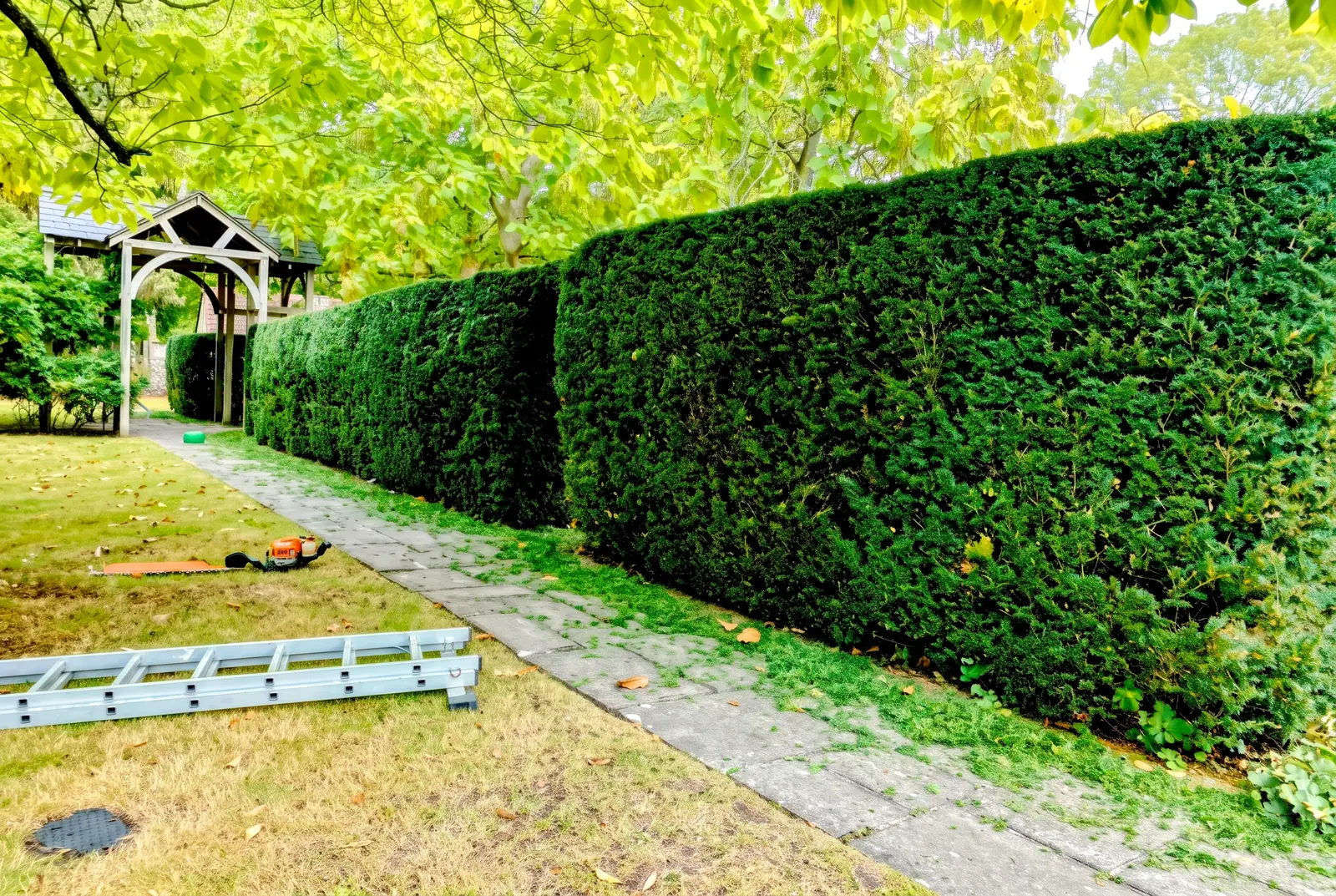
Box balls, cones, pyramids, spirals and the more formal clipped shapes all lose their definition fast if they’re left too long. Most ornamental topiary wants three or four trims through the growing season to keep those crisp lines, and we build that into a regular schedule so they always look intentional rather than shaggy.
We work by eye and by hand on the detailed shapes, taking our time. It’s not a job to rush with a hedge trimmer.
An honest word about box
Box has always been the classic topiary plant, but it’s having a hard time of it in this country right now. Box blight and, more recently, the box tree caterpillar have hit gardens hard, and the caterpillar can strip a box plant bare in a season if it’s not caught. We keep an eye out for it on box we look after and can advise on dealing with it.
If you’re starting fresh, or your box is struggling, it’s worth knowing there are alternatives that give a similar look without the same trouble. Yew is excellent for larger shapes and formal hedging and clips beautifully. We’d rather give you the honest picture than clip a box plant that’s quietly dying.
Questions people ask
Anything else, just ring. You’ll speak to the people who do the work.
What plants work best for topiary?
Box is the classic for balls and smaller shapes, though it’s under real pressure from blight and box caterpillar at the moment. Yew is superb for larger shapes and formal hedging and clips beautifully. We’ll recommend the best choice for what you want and where it’s going.
My box looks sick, what’s wrong with it?
It could be box blight (brown bare patches and dieback) or box tree caterpillar, which spins webbing and eats the leaves, sometimes stripping a plant in a season. Both are widespread now. We can take a look, advise on treatment, and talk through alternatives like yew if it’s not worth saving.
How often does topiary need trimming?
Most ornamental topiary wants three or four trims through the growing season to keep the shapes crisp. Left longer than that and the definition goes. We build the trims into a regular schedule so they always look their best.
Can you create new topiary from an existing shrub?
Often, yes. If you’ve a healthy plant of the right type, we can shape it over a few visits into something more structured. Some plants take to it better than others, and we’ll tell you honestly what’s realistic with what you’ve got.
Topiary near you
We cover Horley and about fifteen miles around it. Pick your town for local detail.
Often booked together.
Most regular visits cover more than one of these. We’ll suggest what makes sense for your garden.
Let’s get your garden sorted.
Tell us what you need and where you are. We’ll come and have a look, and give you a straight price.